How to Choose the Right Coping Thickness for Pools is a practical question we get asked every time homeowners plan a pool renovation or a new pool build in 2026. With travertine pool copings, the “right” thickness is the one that stays stable, drains correctly, and feels safe and comfortable underfoot over time.
Key Takeaways
| What to check first | Measurements, edge conditions, and installation method (wet-set vs dry-set) |
| Why thickness matters | It affects support, edge stability, and water handling in the pool tile and pool edge stone transition zone |
| Thickness is tied to profile | Choose thickness based on the edge profile, not only aesthetics |
| Slip resistance still matters | Your finish choices influence how safe the coping feels when wet |
| Budget planning | Right thickness helps you avoid rework, shifting, and mismatched reveals later |
| Best starting point | Start with our measurement-first checklist: How to Choose the Right Coping Thickness for Pools |
- Question: “How thick should travertine pool coping be?” Answer: We pick thickness based on actual edge conditions, the coping edge profile (bullnose, flat-edge, eased edge), and wet-set vs dry-set compatibility, not a one-size number.
- Question: “Will thickness affect the finished look of a pool renovation?” Answer: Yes. Even if color and finish are right, incorrect thickness can change the reveal and make the whole pool frame look mismatched.
- Question: “What matters as much as thickness in 2026?” Answer: Slip resistance, installation, sealing/maintenance expectations, and how water moves at the pool edge.
To keep your deck-to-waterline transition consistent, we treat coping as part of the full pool frame. For example, when you explore profile pairings like silver bullnose coping vs flat-edge coping, thickness decisions become much clearer because the edge geometry is already defined.
Tip for 2026 projects: start thickness planning early enough that the installer can cut, fit, and confirm edge stability before the perimeter finish is locked in.
Why coping thickness is not just a dimension question
When we say How to Choose the Right Coping Thickness for Pools, we mean it as a technical decision with visible consequences. Thickness impacts support, edge stability, and water handling in the transition between pool tile, the pool shell, and surrounding pavers or deck surfaces.
With travertine coping, the goal is simple: the finished perimeter should feel solid when people step near it, and it should help the system manage splash and runoff. If thickness is off, you may see shifting at the joint line, an uneven reveal, or water sitting where it should drain away.
The right coping thickness is the thickness that stays stable, drains correctly, and creates a consistent reveal under real wet conditions.
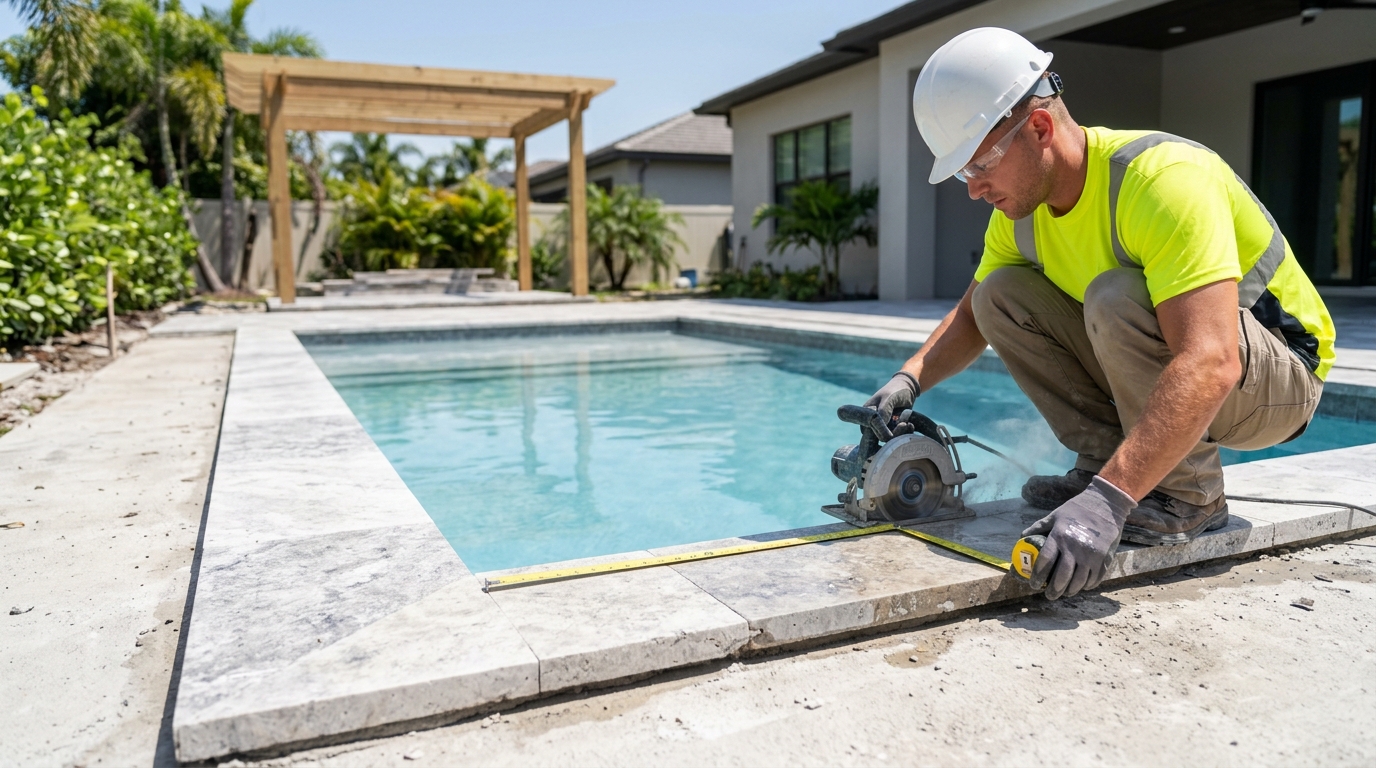
Start with measurements, then match thickness to real edge conditions
Our measurement-first approach is why we like to confirm site conditions before anyone commits to coping thickness. In 2026, the most common mistake we see is choosing thickness based on a reference image, then discovering the pool edge conditions require a different build-up.
Start by capturing:
- Pool perimeter details (length runs, corners, and where the reveal changes)
- Substrate and support area (what the coping will actually sit on)
- Deck-to-waterline relationship (how high the deck is relative to the pool edge)
- Where pooling happens (any areas that tend to hold water after rain or backwash)
- Joint locations and how they align with the surrounding pool coping pattern
Once those measurements are clear, we can answer the question behind How to Choose the Right Coping Thickness for Pools: what thickness gives proper support without creating an awkward lip or a thin edge that feels less stable.
If you are comparing options for a modern pool look, review how thickness and profile expectations work together in Best Silver Travertine Coping for Modern Pool Designs in 2026. It specifically calls out that the coping line acts like a frame, meaning thickness and profile must feel “matched” across the whole perimeter.
Thickness is tied to travertine edge profile (bullnose, flat-edge, eased edge)
In practice, we choose thickness based on the edge profile you want, because profile geometry changes the amount of stone contact area and how the coping transitions underfoot. This is exactly why How to Choose the Right Coping Thickness for Pools can’t be answered by a single number.
Here’s how profile direction usually influences the thickness conversation:
- Bullnose coping (rounded, family-friendly feel): we plan thickness to support a comfortable edge without creating a “blocky” look.
- Flat-edge coping (clean, architectural sightline): we plan thickness to maintain a sharp, consistent line and support a crisp perimeter frame.
- Eased edge (subtle soften, less dramatic than bullnose): we plan thickness to balance comfort with a more controlled silhouette.
For a clear example, modern coping layouts commonly separate silver bullnose comfort from silver flat-edge architectural sharpness. If you pick bullnose or flat-edge, we then confirm thickness needs so the travertine coping sits correctly and the reveal reads the way you designed it.
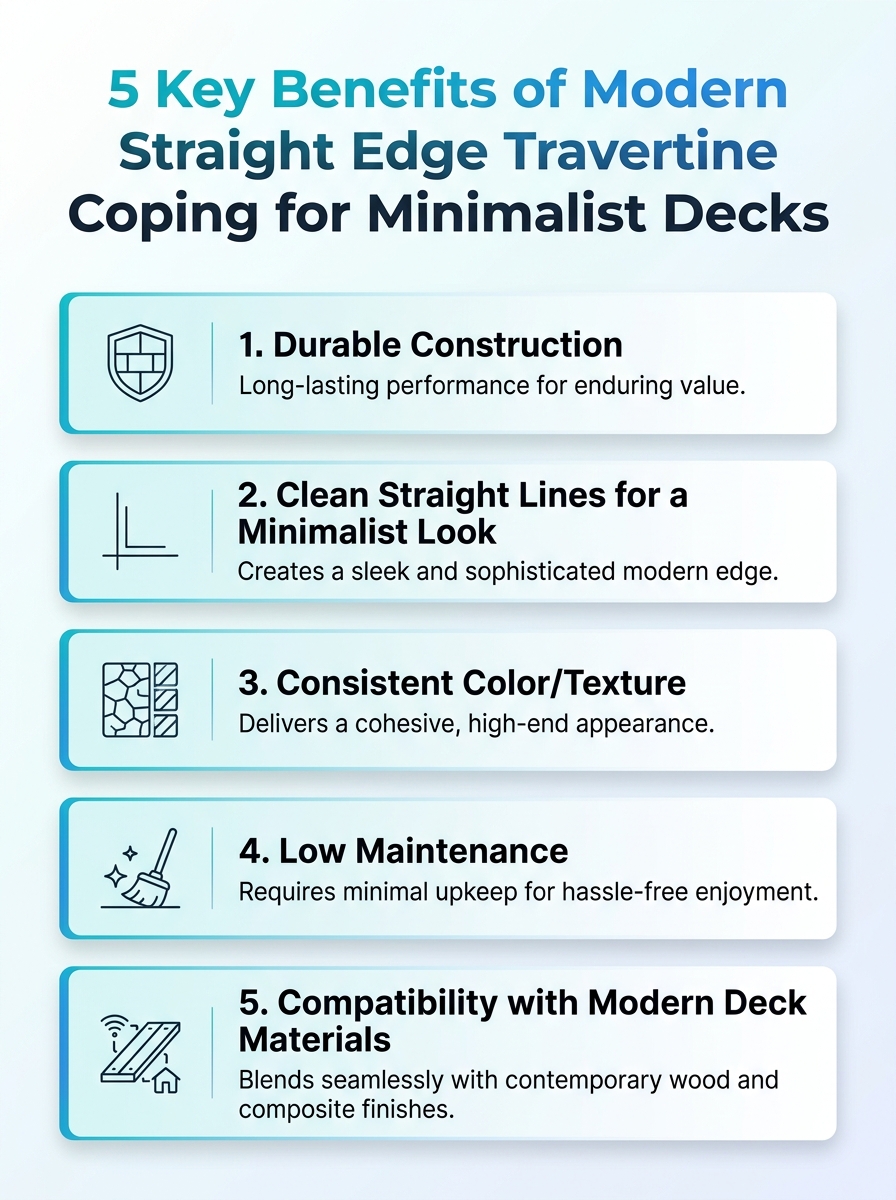
For minimalist deck scapes, a straight-line profile can keep the perimeter calm, but thickness still needs to match the installation method and the support surface. See Modern Straight Edge Travertine Coping for Minimalist Decks for how we treat straight-edge coping as part of the transition zone, not a standalone detail.
New pool builds vs renovations: thickness decisions change
Whether you are building in 2026 or updating an older pool, How to Choose the Right Coping Thickness for Pools depends on what is already there. Renovations often have edge conditions we cannot ignore, so thickness becomes a fix and a finish decision at the same time.
New pool builds usually give us cleaner control. We can plan the coping system with the planned deck heights, the intended pool tile layout, and a consistent reveal from day one.
Renovations require extra site verification. Existing edges may have:
- Uneven substrate support
- Areas where water tends to collect
- Legacy tolerances that affect how the coping sits
- Need for careful alignment so travertine stone seams look intentional
This is why we emphasize thickness compatibility with both the edge profile and the installation method. If wet-set vs dry-set is not planned correctly, even a beautiful travertine stone finish can end up looking “off” because the line does not sit as designed.
Wet-set vs dry-set: how installation affects coping thickness
Even with the right travertine stone color and the right profile, installation method can change what thickness performs best. In our guidance, wet-set vs dry-set considerations are part of choosing the right coping thickness for pool performance in real use.
Wet-set considerations often focus on how the coping is bedded and how the underside of the stone interacts with the setting material, especially at the pool edge where splash happens.
Dry-set considerations often focus on the support contact, how joints are handled, and how movement is controlled so the coping does not shift under load.
Either way, we recommend making thickness decisions together with the edge profile and the installation plan, not after it. That coupling is what keeps the pool frame looking intentional and helps the coping line do its job.
Best travertine coping thickness choices for common pool goals in 2026
Below are “best for” ways to think about How to Choose the Right Coping Thickness for Pools based on the pool goal you care about most. In practical terms, we still verify the measurements, but these use-case frameworks keep decisions grounded.
| Best for | What we prioritize | Why thickness fits the goal |
| Family-friendly pool edges | Comfort-first profile, stable support | Bullnose-style geometry pairs well with thickness that maintains a solid, comfortable underfoot feel |
| Modern, architectural sightlines | Sharp reveal consistency, frame-level alignment | Flat-edge coping needs thickness that supports a crisp perimeter line without weak spots along joints |
| Minimalist decks and calm perimeters | Straight-edge clarity, controlled transitions | Straight profiles rely on correct thickness to keep the transition between pool shell and deck visually “quiet” |
| Water handling and splash control | Drainage behavior and edge stability | Thickness supports how the coping system manages wet conditions at the pool tile and pool edge stone line |
| Pool renovations with limited deck access | Compatibility with existing edge tolerances | The right thickness helps align the new travertine coping to existing surfaces without awkward reveals |
If you are choosing between bullnose and flatter options while planning your thickness, our 2026 silver coping guidance is a good reference point. It calls out the two common directions, silver bullnose coping for comfort and silver flat-edge coping for a sharper architectural look, then connects those choices back to grade, thickness, and fit.
Finish, slip resistance, and how they interact with thickness
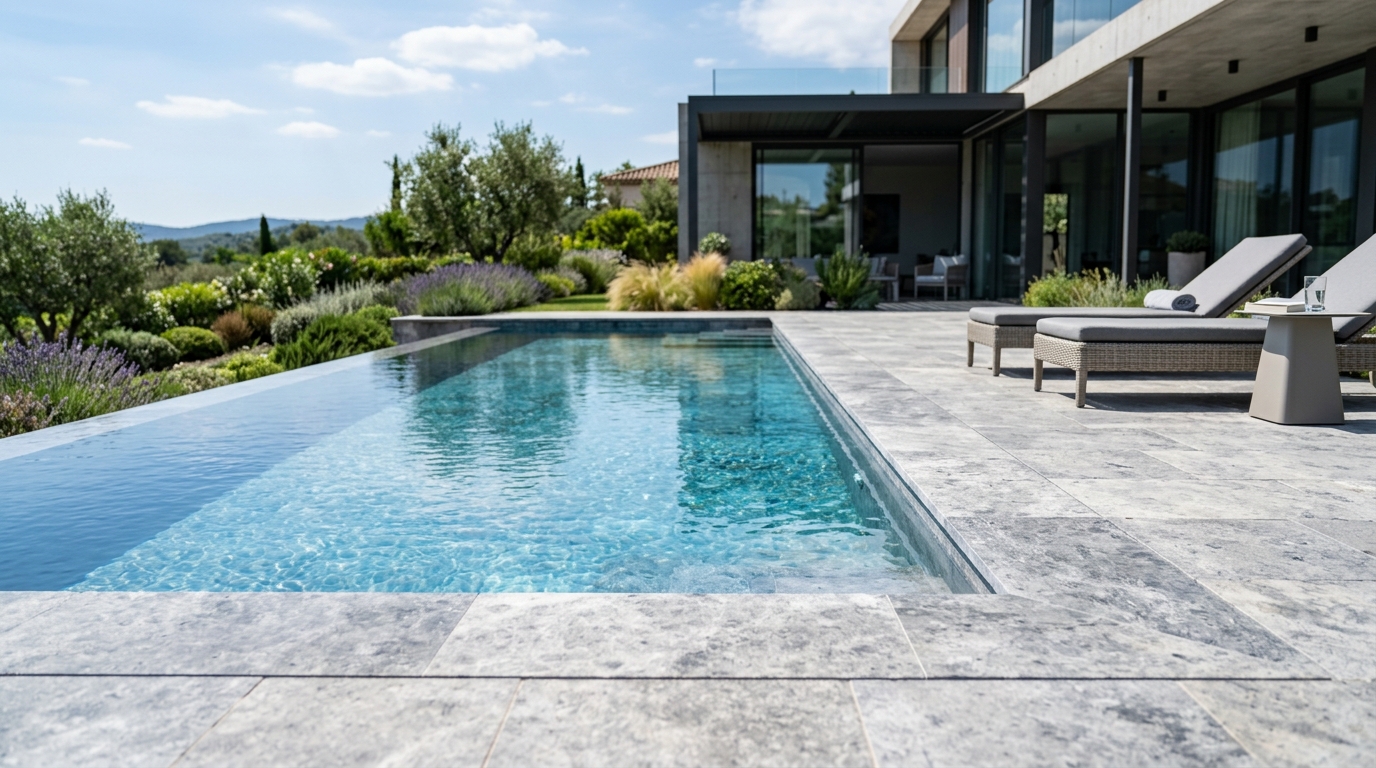
Thickness helps coping feel stable, but finish helps coping feel safe. Our guidance consistently pairs coping thickness decisions with finish and slip resistance, because underfoot comfort matters when the pool is wet.
In 2026, we recommend you treat finish selection as part of the thickness planning conversation. A coping edge that looks perfect dry may behave differently when wet, especially near pool tile splashes and where people naturally step in and out.
Practical checklist we use before ordering travertine stone:
- Confirm the coping edge profile and thickness are compatible with the planned reveal
- Check that the chosen finish supports the slip resistance you need
- Plan sealing and maintenance expectations based on the finish and local conditions
- Verify joints and drainage details so water does not sit at the pool edge stone line
This is also where we remind people that coping is a frame. If the tone, thickness, or profile does not match the rest of your pool frame, the whole perimeter looks mismatched, even if individual materials are high quality.
Why travertine coping is a top choice for pool renovations and new pool builds
We focus on travertine coping because it gives homeowners a natural stone character that looks right around pools, patios, and outdoor living areas. In 2026, that matters even more because many designs favor cleaner lines, calmer palettes, and consistent transitions from deck to water.
Here is what travertine copings bring to both renovations and new pool builds:
- Benefits of travertine coping: strong visual presence, a natural stone feel, and a perimeter frame that looks intentional
- Why colors matter: travertine tones help your pool edge stone coordinate with decking, pool tile choices, and plaster finishes
- Edge comfort and underfoot feel: profile choices like bullnose and eased edge change how the coping feels when wet
- Renovation friendliness: correct thickness helps align new stone with existing edge tolerances for a cleaner perimeter
For color-specific inspiration, our ivory coping guidance is built around travertine tones that create a resort-style pool edge and coordinate well with paving and landscape palettes. It also highlights profile options like classic bullnose, beveled edge, and even waterfall-style coping, which all change the thickness conversation.
Explore: Top 5 Ivory Travertine Coping Options for Backyard Patios.

Quick ordering checks before you finalize coping thickness
Once you have your measurements, profile choice, and installation method, the last step is confirming fit details so your travertine coping arrives ready to install. This is where projects in 2026 succeed or stall, because small compatibility issues can become visible later.
Before we finalize the order, we recommend confirming:
- Edge profile dimensions (so thickness supports the reveal you planned)
- Grade, thickness, and fit alignment (especially for bullnose vs flat-edge intentions)
- Wet-set vs dry-set compatibility with the chosen build-up
- Joint layout and how seams will fall along the perimeter
- Slip resistance expectations tied to the final finish
If you want a simple way to keep decisions organized, we suggest following the same structure used in our measurement-first guidance: start with measurements, then move to profile-linked thickness, and finish with installation and finish checks.
For that exact workflow, revisit How to Choose the Right Coping Thickness for Pools and use it as your project checklist.
Conclusion
How to Choose the Right Coping Thickness for Pools comes down to one idea, thickness must match the real pool edge conditions, the travertine coping edge profile, and the installation method. In 2026, we see the best outcomes when homeowners treat coping thickness as part of the full pool frame, pairing it with finish and slip resistance choices so the perimeter feels stable and safe when wet.
If you want to make your next decision faster, we recommend starting with measurements, then tying thickness to bullnose, flat-edge, or eased edge expectations, and finishing with wet-set vs dry-set compatibility. That approach helps travertine pool copings deliver the look you planned and the performance you need.
Frequently Asked Questions
How thick should travertine pool coping be in 2026?
There is no universal thickness number. When we answer How to Choose the Right Coping Thickness for Pools, we base thickness on the pool edge conditions, the chosen edge profile (like bullnose or flat-edge), and wet-set vs dry-set installation compatibility.
Does coping thickness affect the pool reveal and visual alignment?
Yes. In How to Choose the Right Coping Thickness for Pools, thickness is part of the coping “frame,” so incorrect thickness can shift the reveal and make the pool edge stone and pool tile transition look mismatched.
What is the best coping thickness for a pool renovation?
For renovations, we prioritize compatibility with existing edge tolerances. The right thickness for coping depends on how the stone will be supported and how water handling will work at the perimeter, especially around joints and drainage points.
Should I pick bullnose or flat-edge travertine coping before choosing thickness?
Usually, yes. The edge profile and thickness are coupled, because the geometry changes support needs and underfoot feel. This is a core part of How to Choose the Right Coping Thickness for Pools.
Does slip resistance depend on coping thickness or only the finish?
Slip resistance depends on finish and also on how the coping performs in the wet transition zone. In our approach to How to Choose the Right Coping Thickness for Pools, we plan thickness for stability and then confirm finish and slip resistance expectations together.
How do wet-set vs dry-set installation methods change coping thickness decisions?
They can change what thickness performs best because support contact, bedding, and joint behavior differ by method. For How to Choose the Right Coping Thickness for Pools, we confirm thickness compatibility with wet-set vs dry-set before finalizing the travertine coping order.